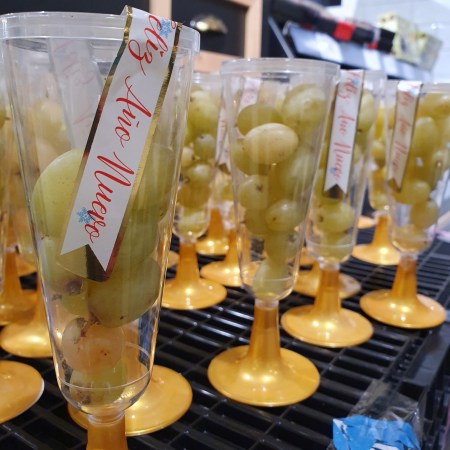
If you are spending New Year’s Eve in Gran Canaria, you might want to join one of the most popular and fun traditions in Spain: eating 12 grapes at midnight. But do you know why and how this custom started? And what are the rules to follow if you want to have a lucky and prosperous year ahead? In this blog post, we will tell you everything you need to know about the 12 grapes tradition and how to enjoy it in Gran Canaria.
The Origin Of The 12 Grapes Tradition
There are different theories about the origin of this tradition, but the most widely accepted one is that it dates back to 1909, when some winegrowers from Alicante, Murcia and Almeria decided to promote their surplus of white grapes by selling them as “lucky grapes” for New Year’s Eve. They claimed that eating one grape with each of the twelve bell strikes at midnight would bring good fortune for the next twelve months.
However, some historians trace the origin of this custom even further back, to the late 1800s, when some wealthy families in Madrid used to celebrate New Year’s Eve with grapes and champagne. To mock this elitist practice, some working-class people gathered at the Puerta del Sol square in Madrid and imitated them by eating their own grapes and drinking their own bubbly. This was the beginning of a massive celebration that still takes place every year at the Puerta del Sol, where thousands of people gather to eat their grapes and welcome the New Year.
The Rules Of The 12 Grapes Tradition


The tradition is simple but not easy: you have to eat one grape with each of the twelve bell strikes that mark the end of the year and the beginning of the new one. Each grape represents one month of the year, so if you manage to eat them all, you will have good luck for the whole year. If you miss one or more grapes, you might have some bad luck in those months.
To increase your chances of success, you should choose small and seedless grapes, and peel them beforehand if possible.