Categories
discover historical sites local attractions

The fascinating world of cave houses in Gran Canaria

One of the most interesting aspects of Gran Canaria is the cave houses that can be found throughout the island. These cave houses are an important part of the island’s history, culture, and architecture, and they continue to attract visitors from all over the world. In this post, we will explore the cave houses in Gran Canaria in more detail, examining their history, their construction, and their significance to the island’s culture.

History of the cave houses in Gran Canaria

The cave houses in Gran Canaria have a long history, dating back to the prehistoric era. It is believed that the first cave houses on the island were created by the Guanches, the native people of the Canary Islands, who used the caves as shelter and protection from the elements. These early cave houses were simple structures, consisting of little more than a hole in the rock with a fire pit and some basic furnishings.

Over time, as the island was colonized and developed by the Spanish, the cave houses became more sophisticated. They were used as homes, storage facilities, and even as churches. In fact, many of the island’s most important cultural and historical landmarks, such as the Cueva Pintada Museum and Archaeological Park, are built around and into cave houses.

Construction of the cave houses

The cave houses in Gran Canaria are constructed using a variety of techniques, depending on the age of the structure and the purpose for which it was built. Some of the earliest cave houses on the island were created simply by digging a hole in the rock and building a fire pit and basic furnishings. Later cave houses were more sophisticated, with carved stone walls and ceilings and wooden or stone doorways.

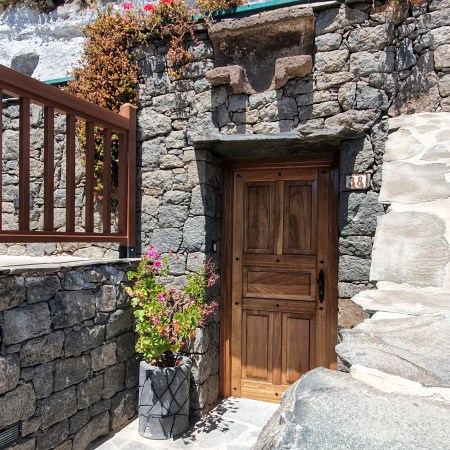
One of the most interesting aspects of the cavehouses in Gran Canaria is the fact that they are still in use today. Many of the island’s residents still live in cavehouses, and these structures have been adapted over time to meet the needs of modern living. Today’s cavehouses often feature modern amenities such as electricity, running water, and even Internet access, while still retaining the unique character and charm of the original structures.

Significance of the cave houses

The cave houses in Gran Canaria are an important part of the island’s culture and history. They serve as a reminder of the island’s prehistoric past and the ancient cultures that once inhabited the island. They are also a testament to the ingenuity and resourcefulness of the island’s inhabitants, who were able to create homes and communities in the midst of a challenging and inhospitable environment.

In addition to their historical and cultural significance, the cave houses in Gran Canaria are also important from an ecological perspective. Because they are built into the rock, they offer a natural insulation against the heat and cold, making them much more energy-efficient than traditional homes. They also have a smaller carbon footprint, as they require less building materials and are less likely to be affected by natural disasters such as hurricanes and earthquakes.

Visiting the cave houses in Gran Canaria

If you’re interested in learning more about the cave houses in Gran Canaria, there are a number of ways to do so. One option is to visit some of the island’s museums and archaeological sites, such as the Cueva Pintada Museum. This site offer a wealth of information about the history and construction of the cave houses, as well as their cultural significance.

Staying at a cave house

Staying in one of these traditional cave houses can be a great way to experience the island’s rich history and culture firsthand. We’ve compiled a list of some of the most interesting and authentic cave houses on the island.

Firgas – Cuevas de Barreto
Artenara – Casa Cueva El Mimo
Artenara – Cave house El Caidero
Agüimes – Rural house Guayadeque Ca’ Juani
Santa Brigida – Casa Cueva Bandama (available on Booking/AirBnB)
Santa Brigida – La Cuevita cave house (available on Booking/AirBnB)
Tejeda – Ecoturismo Casa Cueva (available on Booking/AirBnB)

Categories
art & culture discover experience historical sites local attractions

A Visit to the Museo Canario in Gran Canaria

A Visit to the Museo Canario in Gran Canaria

If you are interested in learning more about the history and culture of the Canary Islands, especially the ancient inhabitants of Gran Canaria, you should not miss the opportunity to visit the Museo Canario. This museum, located in the historic district of Vegueta, houses the largest collection of pre-Hispanic artifacts in the archipelago, as well as a rich library and archive of documents related to the Canarian heritage.

The Origins Of The Museum

The Museo Canario was founded in 1879 by a group of local intellectuals and scholars, led by Dr. Gregorio Chil y Naranjo and Agustín Millares Torres, a historian and notary. They wanted to create a scientific and cultural society that would preserve and study the remains of the aboriginal population of Gran Canaria, who had arrived from North Africa between the first and fourth centuries CE and had developed a unique culture until the Spanish conquest in the 15th century.

The museum was initially housed in a small building near the cathedral of Santa Ana, but soon it became too small to accommodate the growing collections and activities of the society. In 1880, the museum moved to its current location, a former convent of San Francisco that had been abandoned after the confiscation of ecclesiastical properties in 1836. The building was renovated and expanded over the years, adding new rooms and facilities to display the exhibits and host events.

The Collections And Exhibitions

The main attraction of the Museo Canario is its permanent exhibition on the pre-Hispanic population of Gran Canaria, which covers various aspects of their life, such as their economy, society, religion, art, technology and medicine. The exhibition is divided into several sections, each one focusing on a different topic and displaying relevant objects and information.

Some of the highlights of the exhibition are:

  • The ceramic vessels, which show a great variety of shapes, sizes and decorations. Some of them have geometric patterns, others have animal or human figures, and others have inscriptions in an undeciphered script.
  • The terracotta figurines, traditionally considered as idols or representations of deities or ancestors. One of the most famous ones is the Idol of Tara, a female figure with elaborate ornaments and tattoos.
  • The pintaderas, small clay stamps that were used to imprint designs on textiles or skin. They have more than 200 different motifs, some of them similar to those found in other cultures of Africa or America.
  • The mummies and skulls, which show the practices of embalming and cranial deformation that some groups performed on their dead. The museum has more than 900 human remains, some of them dating back to more than 2000 years ago.
  • The tools and weapons, which demonstrate the skills and ingenuity of the aborigines in using natural resources such as stone, wood, bone or shell. They made axes, knives, spears, bows, arrows, needles, hooks and other instruments for various purposes.
  • The models and reconstructions, which illustrate how the aborigines lived in their settlements, caves or forts. They also show how they dressed, adorned themselves and performed rituals.

Besides the permanent exhibition, the museum also organizes temporary exhibitions on different topics related to the Canarian history and culture. Some examples are:

  • The Canary Islands in Ancient Maps: A selection of maps from different periods and origins that show how the islands were perceived and represented by cartographers.
  • The Guanches: Myth and Reality: An analysis of how the image and identity of the aboriginal population has been constructed and transformed over time by different sources and discourses.
  • The Atlantic Routes: A study of how the Canary Islands have been connected to other regions and continents through maritime trade and migration.

The Library And Archive

The Museo Canario also has an important center of documentation that consists of a library, a newspaper library and an archive. These contain more than 60,000 books, 15,000 periodicals and 80,000 documents related to various fields of knowledge such as history, anthropology, archaeology, linguistics, art or literature.

The library and archive are open to researchers and students who want to consult or borrow materials for their studies or projects. They also offer services such as bibliographic searches, document reproduction or interlibrary loans.

Practical Information

If you want to visit the Museo Canario, here are some useful details:

  • Address: Doctor Verneau Street 2
  • Phone: +34 928 336 800
  • Email: info@elmuseocanario.com
  • Website: https://www.elmuseocanario.com
  • Opening hours: Monday to Friday from 10:00 to 20:00, Saturday, Sunday and holidays from 10:00 to 14:00
  • Admission fees: General 5€, Students, unemployed, large families, pensioners 3€, Children under 12 and members free
  • Accessibility: The museum is accessible for people with reduced mobility and has a lift and adapted toilets. There are also audio guides and tactile panels for people with visual or hearing impairments.
  • Parking: The nearest parking lots are Parking Mercado de Vegueta and Parking Vegueta.

The Museo Canario is a must-see for anyone who wants to discover the fascinating history and culture of the Canary Islands. Don’t miss the chance to visit this museum and learn more about the ancient inhabitants of Gran Canaria and their legacy.

Categories
art & culture discover experience historical sites local attractions

Cueva Pintada Museum & Archaeological Site in Gáldar

Cueva Pintada, located in the town of Gáldar in Gran Canaria, is a complex of ancient caves that have been preserved as one of the most important archaeological sites in the Canary Islands. The caves, which date back to the pre-Spanish era, were used by the indigenous Guanche people for both residential and religious purposes.

The name “Cueva Pintada” translates to “painted cave” in English, and this name is well-deserved. The caves are decorated with striking red, black, and white paintings that are thought to have held spiritual and symbolic significance for the Guanche people. These paintings, which are among the best examples of pre-Hispanic art in the Canary Islands, feature a range of designs, including abstract patterns, animals, and human figures.

In addition to the painted caves, the Cueva Pintada complex also includes several underground chambers and living spaces that were used by the Guanche people. The caves were equipped with stone seats, hearths for cooking, and storage spaces for food and other necessities, providing a glimpse into the daily life of the indigenous people.

The Cueva Pintada was discovered in the late 19th century and has been the subject of ongoing archaeological investigation and preservation efforts. Today, the site is open to visitors, who can explore the caves and view the ancient paintings and artifacts.

Despite the efforts to preserve the site, the Cueva Pintada has faced several challenges over the years, including weather damage, vandalism, and theft. In recent years, the site has been fitted with state-of-the-art climate control systems and security measures to ensure its continued preservation for future generations.

The Cueva Pintada is a must-visit destination for anyone interested in the history and culture of the Canary Islands. It offers a unique and fascinating window into the lives of the indigenous Guanche people and the rich cultural heritage of Gran Canaria. Whether you’re a historian, an archaeologist, or simply a curious traveler, a visit to the Cueva Pintada is sure to be a memorable experience.

In conclusion, the Cueva Pintada is a remarkable and well-preserved archaeological site that offers a rare glimpse into the past. Its ancient paintings and living spaces provide a fascinating look into the culture and daily life of the Guanche people, and it is a testament to the importance of preserving the cultural heritage of the Canary Islands for future generations.

The entrance fee is €6 and tickets can be bought online or at the museum (card only). Their openings hours are depending on low- high season so best to check their website.